Set Description:
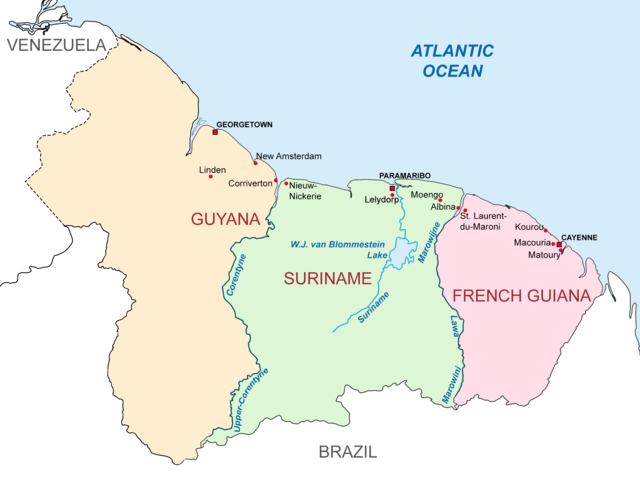
Suriname is located on the northern coast of South America between Guyana and French Guiana. Although sighted by Columbus in 1498 it was about a century before the British, French and Dutch attempted to settle the area, however the local tribes proved extremely hostile and it was 1651 before the first successful European colony was established by the British, at Paramaribo, which is now the capital. Plantations were set up to supply Europe and the US with coffee, sugar and cotton however the Dutch seized the colony in 1667 which the Treaty of Breda made official. The British got New Amsterdam (now New York) in exchange, I expect a very different deal may be made today!
Similar struggles to those experienced by other European colonies in the region culminated in Suriname, also referred to as Dutch Guiana, gaining Independence on 25th November 1975 and modern multi-cultural Suriname was born. A turbulent period following with large changes in population and several military coups destabilising the country. In 2000, the Central Bank of Suriname introduced a distinctive series of banknotes to celebrate the national identity and the biodiversity of the natural flora and fauna. The notes, signed by Hendrick Otmar Goedschalk, feature birds of the region, on the front, with flowers on the back, a stylised creature as a registration device on both the front and the back yet are widely known as the "Birds" series and are very popular with collectors, myself included. Many of the ‘flowers’ I am familiar with as they are often grown as house plants here in the UK.
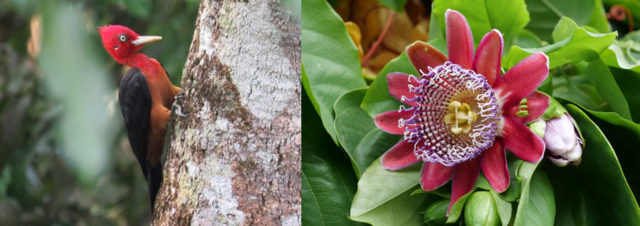
5 Gulden (P146)
Bird: Red-necked woodpecker (Campephilus rubricollis)
Flower: Giant granadilla (Passiflora quandrangularis)
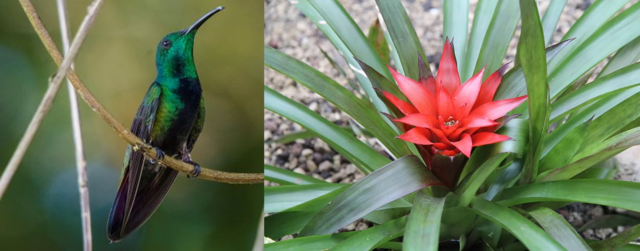
10 Gulden (P147)
Bird: Green-throated Mango (Anthracothorax viridigula)
Flower: Scarlet Star Flower (Guzmania lingulata)
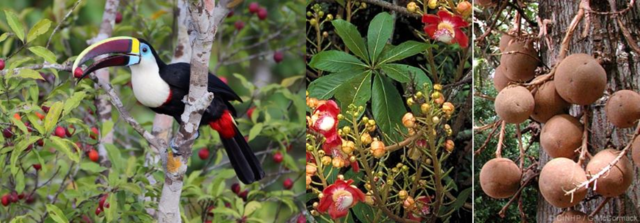
25 Gulden (P148)
Bird: Red-billed Toucan (Ramphastos tucanus)
Flower: Cannonball Tree (Couroupita guianensis)
100 Gulden (P149)
Bird: Long-tailed Hermit (Phaethornis superciliosus)
Flower: Red Frangipani (Plumeria rubra).
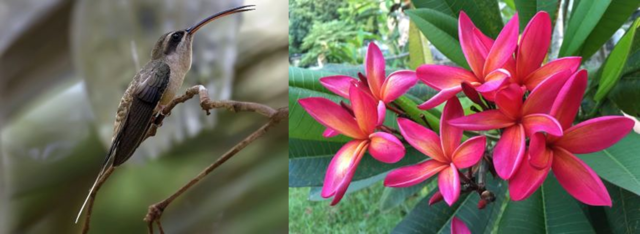
500 Gulden (P150)
Bird: Guianan Cock-of-the-rock (Rupicola rupicola)
Flower: Shining mandevilla (Mandevilla splendens)
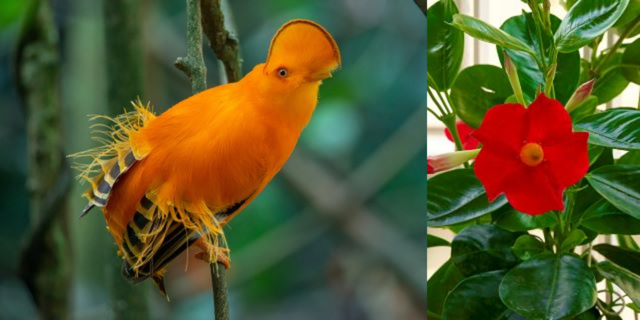
1000 Gulden (P151)
Bird: Tropical royal flycatcher (Onychorhynchus coronatu)
Flower: Cattleya orchid (Orchidacae violacae)
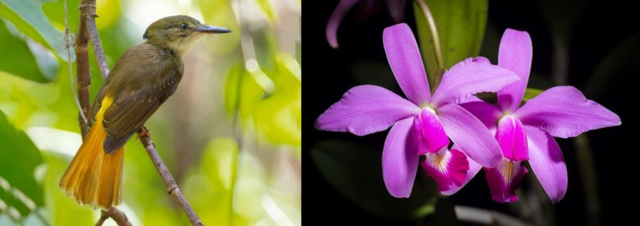
5000 Gulden (P152)
Bird: Sun Conure, sun parakeet (Arantinga solstitialis)
Flower: Butterfly orchid (Oncidium/psychopsis papilio)
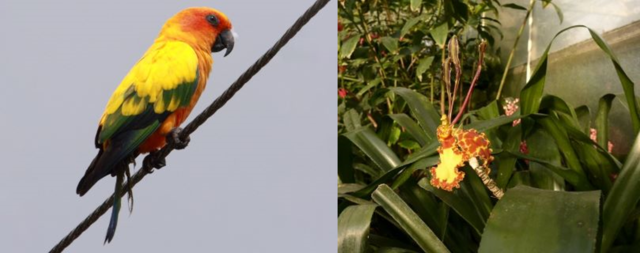
10000 Gulden(P153)
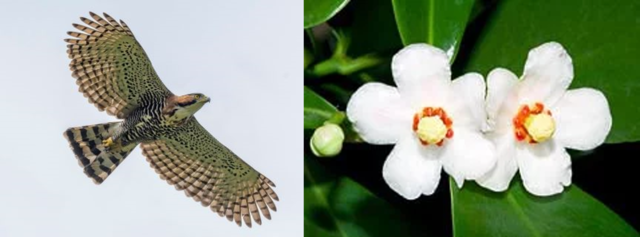
Bird: Ornate Hawk Eagle (Spizaetus ornatus)
Flower: Autograph tree (Clusia grandiflora)
25000 Gulden (P154)
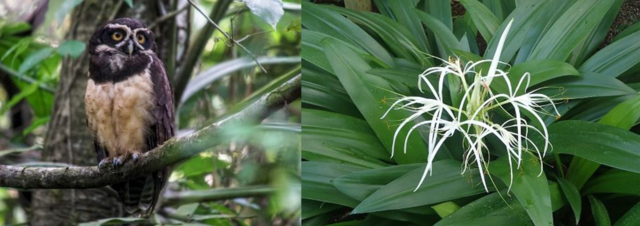
Bird: Spectacled owl (Pulsatrix perspicillata)
Flower: Spider lilly (Hymenocallis caribaea)
Originally issued in 5, 25, 100, 500 and 1000 Guilders denominations Suriname was experiencing high inflation at the time and 5000, 10000 and 25000 Guilder notes soon followed as they were needed for day-to-day transactions. This situation prompted Suriname to replace the Guilder with the Surinamese dollar (SRD) on January 1, 2004 (conversion rate of 1 SRD = 1,000 Guilders). Consequently, Guilder denominated currency, including the "Birds" series of banknotes, were demonetized on December 31, 2003. The appeal of this series is such that these 9 notes account for ~40% of all of the PMG graded notes for Suriname (6352 on 1st June 2025) which, not only has a long and interesting history but an exciting future. The lower value notes are readily available in high grade to collectors, graded and ungraded, whereas the two highest denominations, which generally were redeemed due to still retaining some value, are much more of a challenge and therefore command a premium, particularly the 25000 Guilder note.
I was delighted to be able to finally complete this set several months ago, although I expect it may be a very long time before my 25000 Gulden note gets an upgrade (currently a nice 66 example). The PMG Population Report records a 70* graded 25000 Guilder note, unique for the series so should that appear at auction I would be a mere spectator!
Bird pictures: ebird.com
Map: Wikimedia commons
|